Nahargarh Biological Park Jaipur: Complete Visitor's Guide (Tickets, Timings, Animals & Tips)
Author:Niharika
Published:May 30, 2026
Views:1450
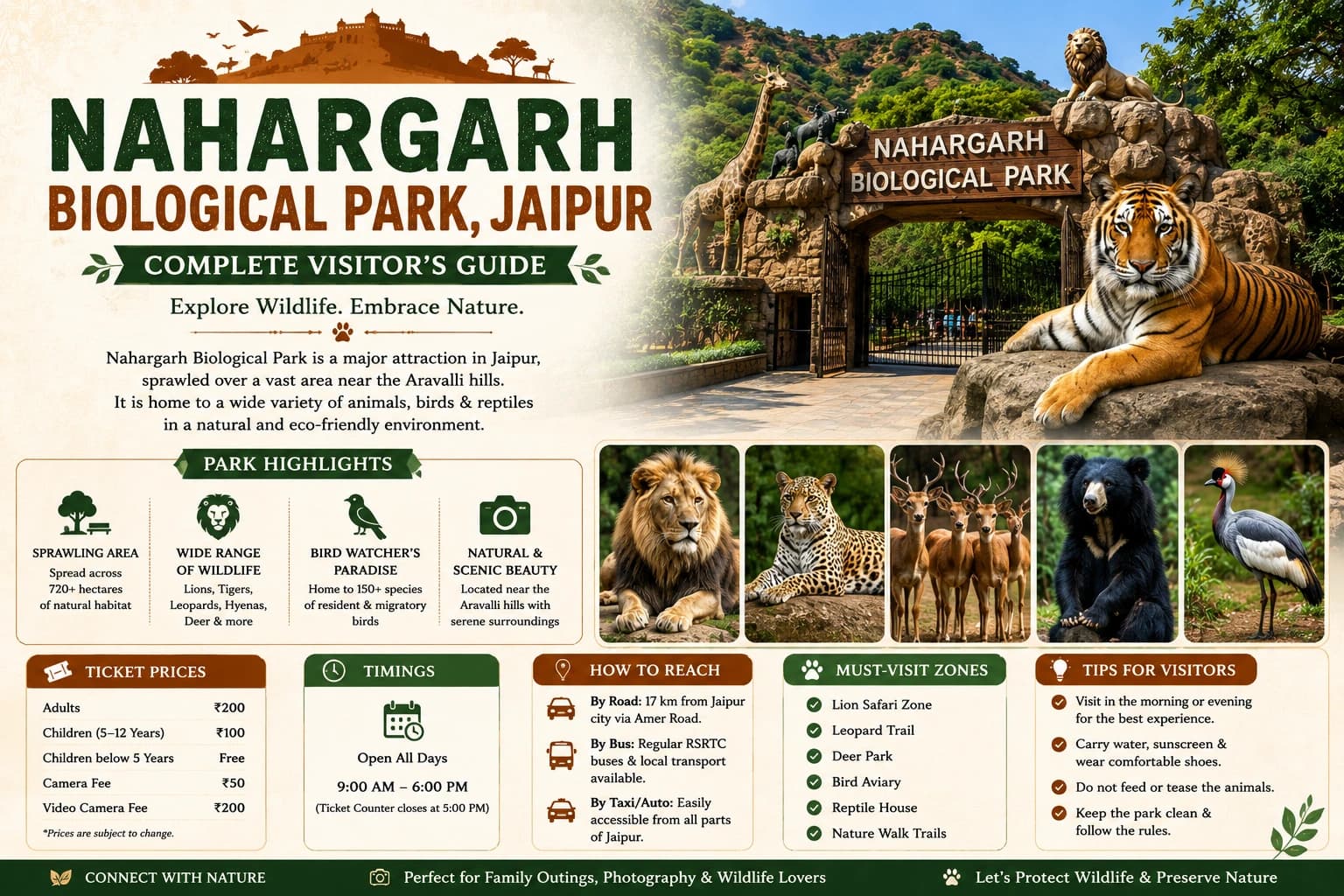
If you are looking for a wildlife experience that goes well beyond the typical tourist trail in Jaipur, the Nahargarh Biological Park is exactly what you need. Tucked into the rugged beauty of the Aravalli foothills along the Jaipur-Delhi highway, this remarkable nature sanctuary is one of the most exciting and underrated attractions in the entire Pink City.
Unlike the crowded forts and bustling bazaars of central Jaipur, the Nahargarh Biological Park offers something rare and increasingly precious - the chance to slow down, breathe fresh forest air, and come face to face with some of India's most magnificent wild creatures in spacious, naturalistic enclosures. Tigers, lions, leopards, bears, crocodiles, and hundreds of bird species await you here, making it an unmissable destination for families, wildlife enthusiasts, nature lovers, and photographers alike.
In this complete visitor's guide by The Jaipur Vista, we cover everything you need to know before you go - from Nahargarh Biological Park tickets and timings to the animals you will encounter, the safari experience, nearby attractions, and the best insider tips to make the most of your visit to this spectacular biological park in Jaipur.
The Nahargarh Biological Park - also known informally as the Nahargarh Zoological Park - is a wildlife conservation and eco-tourism centre spread across approximately 7.2 square kilometres of forested land in the Aravalli mountain range. It forms part of the larger Nahargarh Wildlife Sanctuary, one of Rajasthan's most important protected natural areas.
Located on NH-48 (formerly NH-8) near Kukas village, Sisiyawas, Jaipur, the park was established in 2016 by the Rajasthan Forest Department with a dual mandate: to conserve endangered and native wildlife species found in the Aravalli ecosystem, and to create an educational, eco-sensitive tourism experience for visitors.
What makes the Nahargarh Biological Park distinctively different from a conventional zoo is its philosophy of habitat-first wildlife management. Rather than keeping animals in cramped concrete enclosures, the park has been designed to replicate natural habitats - rocky terrain, forest patches, water bodies, and open grasslands - allowing animals to exhibit natural behaviours. This makes wildlife sighting here far more rewarding and authentic than a traditional zoo visit.
Since its opening, the biological park in Jaipur has grown steadily in both visitor numbers and conservation significance, becoming one of the most talked-about new attractions in Rajasthan's wildlife tourism circuit.
One of the first things every visitor wants to know is the Nahargarh Biological Park timings. Here is the complete and updated schedule:
Opening Days: Open all days of the week including weekends and most public holidays
Entry Time: 8:00 AM
Last Entry: 5:00 PM
Closing Time: 5:30 PM
Safari Timings: The park operates guided safari sessions in the morning and afternoon. It is strongly recommended to book the morning safari session (available from 8:30 AM) as animal activity is highest in the early hours, especially for big cats.
Closed On: The park may observe closure on certain specific holidays - always check the official Rajasthan Forest Department website or call ahead before planning your visit, especially on national holidays.
Best Time of Day to Visit:
Early morning - ideally arriving right at 8:00 AM when the park opens - offers the best chance of seeing tigers, leopards, and lions in active, alert states. The golden morning light is also perfect for wildlife photography. Late afternoon (4:00 PM onwards) is the second-best window for animal activity before the park closes.
Understanding the Nahargarh Biological Park ticket structure before you arrive saves time at the gate and helps you plan your budget. Here is the complete, updated entry fee breakdown:
Note: Mobile phone cameras are generally permitted within general entry charges. Professional DSLR and video equipment attract the above charges. The park operates guided nature safari tours within designated zones. Safari charges are additional to the general entry ticket and vary by vehicle type and zone. It is advisable to confirm the latest safari pricing at the park entrance or on the official website, as these are updated periodically. Insider Tip: The Nahargarh Biological Park ticket is exceptional value for money, particularly for Indian visitors. At just ₹50 per head, this is one of the most affordable premium wildlife experiences available anywhere in Rajasthan. A family of four can enjoy the entire park for under ₹300, making it a wonderful budget-friendly day out. Full Address: NH-48 (Delhi-Jaipur Highway), Near Kukas, Sisiyawas, Jaipur, Rajasthan – 302028 The park is located approximately 20–22 kilometres from Jaipur city centre, on the outskirts of the city towards Delhi. The journey takes about 30–40 minutes by road depending on traffic. By Private Car or Taxi: The most comfortable and convenient option. Take the NH-48 (Jaipur-Delhi highway) northward from the city. The park is clearly signposted near the Kukas township. Taxi and cab services from Jaipur city to the park are readily available through Ola, Uber, and local taxi operators. By Auto-Rickshaw: Autos are available from major Jaipur landmarks including Sindhi Camp Bus Stand, Railway Station, and Amber Fort. Negotiate the fare in advance; the round trip with waiting time typically costs ₹300–500. By Local Bus: RSRTC buses plying the Jaipur-Delhi route on NH-48 stop near the Kukas area. From the highway stop, the park entrance is a short distance by auto or walk. By Private Bike or Scooter: The highway ride from Jaipur to the park is pleasant and straightforward - an excellent option for solo travellers or couples. Nahargarh Biological Park is approximately 270 kilometres from Delhi via NH-48. The drive takes roughly 3–3.5 hours. The park can conveniently be included as a stop on the drive from Delhi to Jaipur, making it a natural first attraction for travellers arriving in Jaipur by road. The park is roughly 8–10 kilometres from Amer Fort and Nahargarh Fort - meaning that visitors exploring the northern heritage circuit of Jaipur can easily combine a morning at the forts with an afternoon visit to the biological park. The star attraction of the Nahargarh Biological Park is undoubtedly its wildlife. The park is home to an impressive collection of animals across multiple species categories, making it one of the most biodiverse wildlife centres in Rajasthan. The Nahargarh Zoological Park is particularly celebrated for its big cat population. The spacious, naturalistic enclosures allow these majestic predators to be observed in conditions that closely approximate their wild habitats: Bengal Tiger (Panthera tigris tigris): The Bengal tiger is India's national animal and the undisputed king of the Nahargarh Biological Park. The park houses several tigers in large, well-designed enclosures with naturalistic vegetation, rocky outcrops, and water features. Watching a tiger at rest in a sun-dappled clearing, or pacing its territory with quiet, coiled power, is a deeply moving experience. Indian Leopard (Panthera pardus fusca): The leopard is one of nature's most elusive and beautiful creatures, and the Nahargarh Biological Park's leopard enclosure gives visitors an excellent opportunity to observe this otherwise rarely-seen predator. The park's leopards demonstrate the full range of their characteristic behaviours - climbing, scent-marking, and resting on elevated platforms. Asiatic Lion (Panthera leo persica): One of the rarest big cats on earth, the Asiatic lion survives only in Gujarat's Gir Forest in the wild. The presence of Asiatic lions at Nahargarh Biological Park gives visitors outside Gujarat a rare opportunity to see this critically endangered subspecies. Their slightly smaller mane compared to African lions and their distinctive belly fold are fascinating features to observe. Indian Panther (Black Leopard): The melanistic form of the Indian leopard - popularly known as the black panther - is among the most dramatic and prized wildlife sightings anywhere. The Nahargarh Biological Park is one of the few wildlife facilities in Rajasthan where visitors have the chance to observe this incredibly beautiful dark-coated big cat. Sloth Bear (Melursus ursinus): India's shaggy, endearing sloth bear - famous for its unique termite-eating habits and its role as the inspiration for Rudyard Kipling's Baloo - is well represented at the park. Watching sloth bears forage and play is an entertaining and educational experience for children and adults alike. Spotted Deer / Chital (Axis axis): India's most common and beautiful deer species, the spotted deer, inhabits the park in graceful groups. Their dappled coats and elegant antlers (on the males) make them a favourite subject for wildlife photographers. Sambar Deer (Rusa unicolor): The sambar is India's largest deer species and an important prey animal for tigers and leopards. The park's sambar population adds an authentic ecosystem dynamic to the visitor experience. Nilgai / Blue Bull (Boselaphus tragocamelus): India's largest antelope, the nilgai - named for the distinctive bluish-grey coat of adult males - is a fascinating and somewhat prehistoric-looking animal. They are well established within the park's open zones. Wild Boar (Sus scrofa): A surprisingly interesting animal to observe up close, the wild boar is an important part of the Aravalli ecosystem and plays a significant ecological role as a prey species for big cats. Indian Porcupine (Hystrix indica): Nocturnal by nature but occasionally visible in the late afternoon, the porcupine's dramatic quill display is a fascinating defence mechanism to observe. Crocodile (Mugger Crocodile - Crocodylus palustris): The park's crocodile section features mugger crocodiles - the species most commonly found in Indian rivers and lakes. Watching these ancient reptiles bask motionlessly beside the water, or glide with deceptive speed below the surface, is a memorable experience. The biological park in Jaipur is a wonderful destination for birdwatchers. Its combination of forest, scrubland, grassland, and water habitats supports a rich and diverse bird population: Resident Birds: Indian Peafowl (Peacock - India's national bird), Indian Roller, Painted Stork, White-breasted Kingfisher, Lesser Florican, Red-wattled Lapwing, Egyptian Vulture, and various species of owls, parakeets, and mynahs. Migratory Birds (October to March): Bar-headed Goose, Common Crane, Northern Pintail, Gadwall, and Eurasian Wigeon among others - the park's water bodies act as important resting points for migratory species on the Central Asian Flyway. Well-Maintained Aviaries: The park houses dedicated aviaries where visitors can observe rare and protected bird species from the Aravalli region at close quarters, including several species that are difficult to spot in the wild. Beyond the mammals and birds, the park is home to various reptile species native to the Aravalli region, including Indian monitor lizards, various snake species, and tortoises. The reptile zone provides an educational look at these often-misunderstood but ecologically vital animals. The guided safari is the highlight of many visitors' experience at Nahargarh Biological Park, and rightfully so. Rather than simply walking past enclosures, the safari takes visitors through larger, semi-open zones of the park where wildlife can be observed in more naturalistic settings. Safari Vehicle: Visitors board dedicated safari vehicles - typically open-sided jeeps or specially designed park vehicles - for the guided circuit through the park's wildlife zones. Duration: A full safari circuit typically takes 1.5 to 2 hours. Guide: Each safari group is accompanied by a trained naturalist guide who provides information about the animals, their ecological roles, behaviour, and conservation status. The guides at Nahargarh are knowledgeable and engaging, adding substantial educational value to the experience. Photography from Safari: The safari vehicles provide excellent vantage points for wildlife photography, with unobstructed views into many of the enclosures and natural zones. Booking the Safari: Safaris can be booked at the park entrance on the day of your visit. During peak tourist season (October to March) and on weekends, it is advisable to arrive early to secure a safari slot, as they can fill up quickly. Insider Tip: The morning safari session is strongly recommended. Big cats are most active in the cooler morning hours, and animal sightings during the 8:30 AM–10:30 AM window are significantly more rewarding than afternoon visits. While most visitors focus on the fauna, the flora of Nahargarh Biological Park is equally significant and beautiful. The park's vegetation reflects the natural biodiversity of the Aravalli Range - one of the oldest mountain systems in the world. The dominant vegetation type is tropical dry deciduous forest, characterised by trees such as Dhok (Anogeissus pendula), Khejri (Prosopis cineraria), Rohida (Tecomella undulata), Ber (Ziziphus mauritiana), and various species of Acacia. In rocky areas, succulent plants, aloe species, and native grasses create a distinctive semi-arid landscape. The forest cover provides essential ecosystem services - shade for the animals, habitat for birds, and a buffer against the urban heat of Jaipur that visitors can feel the moment they step into the park. The visual contrast between the dusty highway outside and the lush, green interior of the biological park is striking and refreshing. For Photography: The combination of Aravalli rock formations, forest foliage, and wildlife makes for exceptionally photogenic compositions. Golden hour light - in the hour after opening and before closing - transforms the park into a landscape photographer's dream. The Nahargarh Biological Park is far more than a tourist attraction. It is a serious conservation facility working on multiple fronts to protect Rajasthan's endangered wildlife: Species Preservation: The park participates in national breeding programmes for several endangered species, including the Asiatic lion and Bengal tiger. Successful breeding within the park's protected environment contributes directly to India's wildlife population. Habitat Restoration: Large sections of the park are dedicated to restoring native Aravalli vegetation - planting indigenous tree species, creating water bodies, and allowing degraded forest areas to regenerate naturally. Environmental Education: The park runs structured awareness programmes for school groups, college students, and community organisations from across Rajasthan. These programmes aim to build a conservation ethic among the next generation of Rajasthan's citizens. Rescue and Rehabilitation: The park functions as a rescue centre for injured and orphaned wildlife recovered from across Rajasthan. Animals that cannot be released back into the wild are given permanent, well-maintained homes within the park. Research Support: The biological park supports and collaborates with wildlife research institutions across India, contributing to scientific understanding of Aravalli ecosystem species. When you buy a Nahargarh Biological Park ticket, you are directly supporting all of these vital conservation activities. Your entry fee contributes to the care of the animals, maintenance of habitats, and the educational programmes that are building a conservation-conscious generation in Rajasthan. The Nahargarh Biological Park has been designed with visitor comfort and convenience in mind: Pathways: Well-maintained, clearly marked walking pathways connect all the different animal zones. The paths are wide enough for comfortable two-way pedestrian traffic and are surfaced to be walkable year-round. Accessibility: The park provides wheelchair access for senior citizens and visitors with mobility challenges on the main pathways. Families with prams and strollers will also find the main circuits manageable. Restrooms: Clean, maintained restrooms are available at multiple points within the park, including near the entrance and in the central visitor area. Cafeteria / Refreshments: A cafeteria and refreshment kiosks operate within the park, offering snacks, beverages, and light meals. Given the walking distances involved in exploring the full park, it is a good idea to carry water bottles and some snacks, especially during summer months. Seating Areas: Shaded seating areas are provided at intervals along the pathways, allowing visitors - especially elderly guests and families with young children - to rest and take in their surroundings. Information Boards: Informative interpretation boards at each enclosure explain the species' natural range, ecological role, diet, behaviour, and conservation status - adding significant educational value to the visit. Souvenir Shop: A small souvenir and gift shop near the park entrance offers wildlife-themed merchandise, postcards, and educational materials. October to March (Highly Recommended): This is the absolute best time to visit the Nahargarh Biological Park. Rajasthan winters are mild and pleasant, with daytime temperatures ranging from 15°C to 25°C. Animals are highly active, vegetation is lush from the monsoon, and the clear skies make for brilliant wildlife photography. This is also peak tourist season in Jaipur, so the park is busier - arrive early on weekdays to avoid crowds. April to June (Summer - Not Recommended for Comfort): Rajasthan summers are extreme, with temperatures regularly exceeding 40°C in May and June. While the park remains open, animal activity is reduced as most species seek shade and conserve energy in the heat. Visitor comfort is also significantly reduced. If you must visit in summer, go very early (8:00–10:00 AM) before the heat becomes oppressive. July to September (Monsoon): The monsoon transforms the Aravalli hills around the park into a spectacular green landscape. Animal activity increases as temperatures drop. However, pathways can become slippery after rain, and some zones may be temporarily closed. The monsoon version of the park has a moody, dramatic beauty that appeals to landscape photographers. Weekdays (Monday to Friday, excluding holidays) offer a significantly quieter, more peaceful experience. Weekends and public holidays see substantially higher visitor numbers and longer queues at the ticket counter and safari booking. Many visitors wonder how the Nahargarh Biological Park (or Nahargarh Zoological Park, as it is sometimes called) differs from a conventional zoo. The distinction is important and worth understanding: A traditional zoo prioritises compact enclosures, easy public viewing, and minimal land use. Animals live in constrained spaces that often bear little resemblance to their natural habitats, and natural behaviours are frequently suppressed. The Nahargarh Biological Park operates on a fundamentally different philosophy - one that prioritises animal welfare, natural behaviour, and ecological authenticity over convenience of viewing. Enclosures are large and naturalistic. Water bodies, rock formations, vegetation, and topographic variation give animals the stimulation and space they need to thrive. The emphasis is on creating a functioning ecosystem fragment rather than a display case. This means that wildlife sightings here require patience and attention - much like actual wildlife watching in the wild. A tiger may be resting in dappled shade at the far end of its enclosure, or a leopard may be perched on a high platform barely visible through tree cover. This is the park working as it should - and for visitors who appreciate authentic wildlife experiences, it makes every sighting deeply satisfying. The northern Jaipur area around the biological park is extraordinarily rich in attractions. Here are the must-see destinations that pair perfectly with a visit to the Nahargarh Biological Park: The imposing Nahargarh Fort stands on the Aravalli ridge overlooking Jaipur city and the biological park below. Built by Maharaja Sawai Jai Singh II in 1734, the fort offers some of the most spectacular panoramic views in all of Rajasthan - especially at sunset, when Jaipur's rooftops glow gold and amber. The fort also houses a fascinating wax museum and a popular rooftop restaurant. Combining a morning at the biological park with a sunset visit to Nahargarh Fort makes for a perfect day in northern Jaipur. The magnificent Amer Fort - a UNESCO World Heritage Site - is one of Jaipur's most iconic landmarks and should be on every visitor's itinerary. Its stunning blend of Rajput and Mughal architecture, the mesmerising Sheesh Mahal (Hall of Mirrors), and its commanding hilltop position make it an unforgettable experience. The fort is approximately 10 km from the biological park. Jaigarh Fort is connected to Amer Fort by an underground passage and houses the world's largest cannon on wheels - the magnificent Jaivana cannon. The fort's panoramic vantage points and military architecture make it a fascinating complement to Amer Fort. Situated at the foot of the Aravalli hills near Amer, the beautifully landscaped Kanak Vrindavan Garden is a serene green retreat with ornamental fountains, manicured lawns, and a historic Radha-Krishna temple. It is a perfect spot for a peaceful afternoon walk. The ethereal Jal Mahal (Water Palace) rising from the centre of Man Sagar Lake is one of Jaipur's most photographed sights. The palace, surrounded by water with the Aravalli hills as a backdrop, is best appreciated during the golden hour when the reflections create a mirror image of extraordinary beauty. This intricately designed ancient stepwell (baoli) near Amer is one of the most geometric and visually stunning structures in Rajasthan. The criss-crossing stairways descending into the stepwell create a mesmerising optical effect that is a favourite among photographers. These practical tips from people who know Jaipur well will help you get the most from your visit: Arrive at Opening Time: Arriving right at 8:00 AM gives you the best animal activity, the freshest air, and the lightest crowds. Big cats are most active in the first two hours after opening. Wear Comfortable Footwear: Exploring the full park involves several kilometres of walking over mixed terrain. Comfortable walking shoes or sports shoes are essential. Sandals and heels are a bad idea. Dress for the Weather: In winter (October–February), mornings can be quite cool - carry a light jacket. In summer, wear light, breathable fabrics and a hat. Sunscreen is important year-round in Rajasthan. Carry Water: Hydration is critical, especially in warmer months. The cafeteria sells water, but carrying your own 1–2 litres is more convenient and economical. Keep Noise Minimal: Loud talking, music, and sudden movements disturb the animals and reduce your chances of good sightings. A quiet, patient visitor always sees more wildlife. Respect the Animals: Never tap on glass enclosures, throw food or objects, or attempt to interact with the animals in any way. These behaviours are harmful to the animals and are strictly prohibited by park rules. Photography Etiquette: Avoid using flash photography near the animals. Many species are sensitive to sudden light flashes. If you are carrying a DSLR or video camera, declare it at the ticket counter and pay the appropriate photography charge. Plan for 3–5 Hours: A thorough exploration of the biological park takes between 3 and 5 hours, including the safari. Do not rush - take time to observe the animals, read the information boards, and absorb the remarkable natural environment. Combine With the Safari: Do not skip the safari. Even if you plan to walk the park independently, the guided safari adds a dimension of wildlife observation and expert commentary that transforms the experience. Visit on a Weekday: If your schedule permits, a weekday visit offers a significantly more peaceful and immersive experience than a crowded weekend. Most people who visit Jaipur see the same famous sights - Amer Fort, Hawa Mahal, City Palace, Jantar Mantar - and return home with a wonderful impression of the Pink City's royal heritage. But Jaipur has another face: one of dramatic natural landscapes, ancient mountains, and extraordinary wildlife that relatively few tourists take the time to discover. Nahargarh Biological Park is the gateway to that other Jaipur. It is a place where, just 30 minutes from the city's bustling markets, you can watch a Bengal tiger move through dappled forest light, hear the haunting cry of a peacock from the Aravalli canopy, and feel the profound stillness of an ancient mountain ecosystem that has endured for hundreds of millions of years. At The Jaipur Vista, we believe that the most memorable travel experiences are the ones that connect you with something larger than the tourist trail - something real, wild, and deeply alive. The Nahargarh Biological Park offers exactly that kind of experience, and it is one of the most meaningful half-days you can spend in Rajasthan. Plan your visit, arrive early, take the safari, and let the wildlife of the Aravallis remind you of what Rajasthan looked like long before the first fort was built. Happy exploring! 🐅 Q1. What is Nahargarh Biological Park famous for? Q2. What are the Nahargarh Biological Park timings? Q3. What is the Nahargarh Biological Park ticket price? Q4. Is Nahargarh Biological Park the same as Nahargarh Zoological Park? Q5. Can we see tigers at Nahargarh Biological Park? Q6. How far is Nahargarh Biological Park from Jaipur city centre? Q7. Is there a safari at Nahargarh Biological Park? Q8. What is the best time to visit Nahargarh Biological Park? Q9. Is Nahargarh Biological Park good for families and children?Vehicle Entry Charges (Parking)
Safari Charges
How to Reach Nahargarh Biological Park
From Jaipur City Centre
From Delhi
From Amer Fort / Nahargarh Fort
Animals at Nahargarh Biological Park - Wildlife You Will Encounter
Big Cats - The Park's Crown Jewels
Bears, Herbivores & Other Mammals
Avian Life - A Birdwatcher's Paradise
Reptiles and Other Wildlife
Safari Experience at Nahargarh Biological Park
Flora of Nahargarh Biological Park - The Green World Around You
Conservation Mission: Why Nahargarh Biological Park Matters
Visitor Facilities at Nahargarh Biological Park
Best Time to Visit Nahargarh Biological Park
By Season
By Week
Nahargarh Biological Park vs. Traditional Zoo: What Makes It Special
Nearby Attractions: What to Combine With Your Nahargarh Biological Park Visit
Nahargarh Fort (7 km)
Amer Fort (10 km)
Jaigarh Fort (Adjacent to Amer)
Kanak Vrindavan Garden (12 km)
Man Sagar Lake & Jal Mahal (15 km)
Panna Meena Ka Kund (11 km)
Insider Tips for Visiting Nahargarh Biological Park
Nahargarh Biological Park: Essential Information Summary
Final Word: Why Nahargarh Biological Park Belongs on Every Jaipur Itinerary
Frequently Asked Questions About Nahargarh Biological Park
Nahargarh Biological Park is famous for its big cat population - particularly Bengal tigers, Indian leopards, Asiatic lions, and black panthers - as well as its naturalistic enclosure design, guided safari experience, and remarkable birdlife. It is one of the best wildlife destinations in Rajasthan.
The park is open daily from 8:00 AM to 5:30 PM, with the last entry at 5:00 PM. Morning hours (8:00–11:00 AM) offer the best wildlife viewing experience.
Entry tickets cost ₹50 for Indian adults, ₹300 for foreign nationals, and ₹20 for students (with valid ID). Photography charges are additional. The safari is also an additional cost, payable at the park.
Yes - the park is referred to by both names. "Biological Park" is the official designation, while "Zoological Park" or "Zoo" is how many locals refer to it. It is the same facility.
Yes. Bengal tigers are among the star attractions of the Nahargarh Biological Park. They are most active and visible during early morning hours, particularly between 8:30 AM and 11:00 AM.
The biological park is approximately 20–22 kilometres from the Jaipur city centre, situated on NH-48 (Jaipur-Delhi highway) near Kukas village. The drive takes approximately 30–40 minutes.
Yes. The park operates guided safari tours through its wildlife zones. Safaris are available in the morning and afternoon, and it is strongly recommended to book the morning session for the best wildlife sightings.
The best time to visit is during the winter months of October to March, when the weather is pleasant and animal activity is at its highest. Within the day, arriving right at opening time (8:00 AM) offers the best experience.
Absolutely. The park is one of the best family day-out options in Jaipur. Children are captivated by the big cats, deer, bears, and birds, and the educational information boards make the visit genuinely enriching. The accessible pathways and cafeteria add to the family-friendliness of the venue.
Carry comfortable walking shoes, water bottles, sunscreen, a hat or cap (especially in summer), and snacks. If you are bringing a camera, keep in mind the photography charges at the ticket counter. A light jacket is essential in winter mornings.